Thursday, September 2, 2010

Early Fall Lawn Care

Where did summer go? I can't believe I just typed "Early FALL Lawn Care" for a title. Seems like just a couple days ago I was writing "Early Spring Lawn Care".

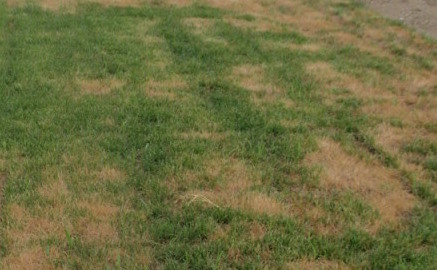
We have had the wettest summer on record here in Sioux City. Not by just a smidge either, it was wetter than the previous record year, 1987, by a full three inches! The excessive moisture has complicated lawn care creating the perfect environment for mulch molds and lawn fungus.This makes it extra important for you to provide some extra TLC for your yard this month. The time you take now will pay off with a healthier yard next spring.

Fertilize - Fall is the good time to treat your lawn for broadleaf weeds like the dandelion. Many folks mistakenly treat for broadleaf weeds in the spring. The chemicals are best absorbed by the plants in the fall, which will keep them from sprouting in the spring. Fall is also a good time to replenish the nitrogen in your grass.

Dethatching  is also a good activity to open up the grass after a season of mowing. A thin layer is good for your grass, but thatch that’s deeper than 1 inch should be removed as it prevents air, light and water from reaching the turf's root zone. As thatch accumulates, there is a tendency for root growth to occur primarily in the thatch layer rather than the soil. This results in a weakened, poorly rooted turf that is prone to stress injury. Thatch also makes an excellent breeding ground for harmful insects and disease organisms. If you are feeling adventurous you can use a rake, but a weekend rental of a powered dethatcher will get the job done quickly and save your back!

Aerate the lawn after it has been dethatched. Aeration allows more nutrients and water to reach the grass root zone. Fall is a good time to do it as grass plants are beginning to store food for next spring 

One reminder -- BEFORE you aerate or dethatch with a power device FLAG your sprinkler heads so you don't hit them.

Remember to keep those mowing blades high! Your grass will thank you for it!


Have a super week!

Keep it Green!

Friday, August 20, 2010

A Day Brightener


Working in any industry where you provide service is difficult. Frankly, there are people you just can't seem to make happy regardless of how hard you try! It is so nice to hear words of praise and thanks from our customers. I can't even begin to express how much it means to us when you kind-hearted folks go out of your way to show your appreciation.

A few days ago I got a early morning voice mail message from a customer out at Dakota Dunes. This woman had moved into her home several years prior and it had another company put in her sprinkler when the house was built. We serviced her sprinkler for the very first time this year.

She called because she was watching her sprinkler run and was so delighted at it's performance that she was compelled to call and say thank you. Among her comments were "our yard looks fantastic", and "I never knew what a good sprinkler head looked like", and we are "thrilled, amazed and very, very happy".  If that wasn't enough to get me good and awake to start my day, she ruined my mascara with her next comment - "May the Lord bless you and your crew for all the good work you do for people".

Let me tell you, she may feel blessed to have a well-adjusted, well-running sprinkler, but we were even more blessed that she took the time to thank us for it. To her it was a simple phone call, but for me, it made my week.

If you have someone who helps you out whom you appreciate - let them know! You will both feel better for it.

Thank you, Siouxlanders, for your calls and notes of thanks. We wouldn't be who we are without you all to support us!

Have a super weekend!

Keep it Green!

Tuesday, August 10, 2010

Highlights from the Jensen Garden

Greetings from the mosquito capital of the world! Okay, that isn't any official title, but if you have spent any time outside lately you certainly know what I mean. I am starting to think that something along the lines of a bio-hazard suit is the only way to avoid getting eaten alive. Bug spray doesn't even seem to stop the little buggers.

Someone asked why I didn't post a garden update for July. The answer: Embarrassment! On our first garden blog I admitted to being a neglectful gardener - you remember that, don't you? Our garden is a haven for weeds this year. Between the rain storms and the humidity encouraging rapid growth and the realities of being hard-working folk, we just couldn't keep up. Next year we will return to the newspaper and grass clippings method of weed control. It is biodegradable, ads nutrients to the soil, is very cost effective and reduces the weeds by at least 75% if you do it correctly. It takes a bit of effort to get this accomplished in the spring (which was the problem this year!) but we were very pleased with the results the season we did try it.

The picture in the upper left is what our garden looked like after the storms on Sunday the 8th of August. Flattened. We should still be able to harvest the corn that was ready, but the garden is in a sad state. I am very thankful that this is just a hobby and not what provides our income. It was very happy to see the acres of corn across the way from us were mostly still standing, just a few around the edges were down. We were disheartened at the sight of our little plot, I can only imagine what farmers go through when their entire livelihood is destroyed by a single storm.

In addition to weeds we had to contend with a fungus that took out the cucumber plants. This is the third year in a row we have had this issue with the cucumbers. Apparently the fungus is remaining dormant over the winter and reawakening to attack mid-summer when the plants are just starting to produce. It is a cruel fungus, killing off the plants just as your mouth is watering for fresh cucumber! According to the experts, this problem is called "brown spot" and should be treated weekly with copper sulfate. We have been directed to treat the soil with copper sulfate this fall after the plants are out of the ground to prevent it from returning next spring.

Among the weeds, fungus and bugs and a nibbling ground squirrels we have had some great garden successes. We have a TON of tomatoes this year, which is always a good thing - few things taste better than a fresh garden tomato. We harvested a few record-sized vegetables, which is exciting. One of them was a two pound, 8" long potato:


Another was an almost foot long yellow pepper:
And the last giant vegetable of the week was a 4x4 red pepper. You won't find them like this in the grocery store!


These are the finds that keep us going back day after day; fighting the weeds, mosquitoes, fungus and critters that want to gobble up what we are trying to grow!  It makes it all worthwhile when you find an exceptional vegetable to share and enjoy.

So that is what is going on in our garden. How about you?

Have a super week!

Keep it Green!

Monday, August 2, 2010

Smart Irrigation Month Finale

Smart Irrigation Month has zipped right by, much like the rest of the summer! We have had the weirdest weather here in Siouxland this summer. Heavy rains coupled with days of fast-drying heat. This was a great summer to show folks the usefulness of a rain shut off device! I have had calls from customers thanking me for explaining the benefits of these devices and installing one on their system. Not one customer has regretted having one installed.


Following is our last installment from the Irrigation Association for Smart Irrigation Month - (The words in italics are from me)


Water Wisely

Today’s irrigation systems include sophisticated controllers that allow you to easily adjust watering schedules to fit different needs.
  • Get in the zone. Schedule each individual zone in your irrigation system to account for type of sprinkler, sun or shade exposure, and soil in that section. Different zones will almost always need different watering schedules.  (This is where Smart controllers really shine with zone by zone precision controls)
  • Consider soil type. Type of soil determines how quickly water can be absorbed without runoff. Watering more than soil can absorb causes runoff and waste.  (The clay soils of Sergeant Bluff are going to hold water much longer than the sand soils of Dakota Dunes)
  • Don’t send water down the drain. Set sprinklers to water plants, not your driveway, sidewalk, patio or buildings.  (I don't care how much you water it, concrete isn't going to grow! Keep it on the grass!)
  • Water only when needed. Saturate root zones and let the soil dry. Watering too much and too frequently results in shallow roots, weed growth, disease and fungus.
  • Water at the best time. Watering during the heat of the day may cause losses of up to 30 percent due to evaporation. Prevent water loss by watering when the sun is low or down, winds are calm and temperatures are cool — typically between the evening and early morning.
  • Water more often for shorter periods. For example, setting your system to run for three, 5-minute intervals lets soil absorb more water than watering for 15 minutes at one time, reducing runoff.
  • Adapt watering to the season. Familiarize yourself with the settings on your irrigation controller and adjust the watering schedule regularly based on seasonal weather conditions. Or invest in a smart controller so your system can make these changes automatically.


Smart Irrigation Month is over, but that doesn't mean you should stop being a smart consumer. Take care of your sprinkler and your mower. Your yard will thank you by staying green, lush and healthy AND need less water!

Have a super week!

Keep it Green!

Monday, July 26, 2010

Sprinkler Check-Up

We know that many of you do all you can to avoid a service call. We understand! We designed our website to help the do-it-yourself folks. We hope the blog entries provide you with education and information to assist you as well.

The hot summer days are sure to show you very quickly where you are having an issue with your system. It is best to catch them before they show on your lawn- or worse - your water bill!

Your system, even if started by a professional in spring, will need to be checked by you at least once a month during the watering season. A weekly walk is even better. A simple check of the following five areas can go a long way toward helping keep your irrigation system running efficiently and your landscape looking great.

1. Misaligned heads: If any sprinkler heads are watering the street, patio, sidewalk or driveway, they’ve   probably shifted from their original position and require a simple adjustment.
2. Obstructed heads: Taller grass around sprinkler heads may block your intended spray pattern and prevent water from reaching your lawn or other plants. Make sure you have at least 3- or 4-inch pop-up sprinklers to fully clear taller grass. You may also need to trim back overgrown plant material that could block the spray.
3. Broken parts: Sprinkler parts can sometimes be broken by lawnmowers or foot traffic. Replace any broken parts, being sure to match the spray pattern and distance for peak performance.
4. Clogged nozzles: Dirt, small rocks or other debris can occasionally clog sprinkler heads. Clogged heads will need to be cleaned. For do-it-yourselfers, this involves turning off the zone, unscrewing the nozzle and then rinsing the nozzle and filter screen in some clean water. Once cleared, the nozzle and filter screen should be put back into place, checking to make sure the spray is aligned properly.
5. Head-to-head coverage: For even, efficient watering, each sprinkler’s spray should just reach the next sprinkler head. Under-spray may result in dry spots that can eventually turn brown, while over-spray wastes water. A simple adjustment should take care of this problem.

Understandably, you may not be able to take care of all of these adjustments or repairs yourself, but knowing what to look for is half the battle. Knowing who to call when you are over your head takes care of the other half!

Have a super week!

Keep it Green!

Monday, July 19, 2010

Water Smart with Underground Irrigation

After our little fungal detour last week (that doesn't sound quite right, does it?) we are back on track with Smart watering tips from the Irrigation Association.

Having an automatic sprinkler will save you time and water. A well designed irrigation system will properly cover your landscape and you don't have to remember to move the hose or turn off the water.  

The following list contains the reasons why the Irrigation Association encourage you to have an automatic sprinkler:

Using an automated irrigation system is one of the best ways to keep your lawn and landscape beautiful and healthy, while minimizing water waste. Plan carefully for a reliable, flexible irrigation system that can grow and evolve along with your landscaping.
  • Use components that provide flexibility. Different plants have different watering needs, and these needs may change over time. Your system should allow you to apply the right amount of water for each type of plant by the most effective method.
  • Install excess capacity. Irrigation zones are areas that are watered by the same irrigation valve and plumbing. Installing extra connections now makes it easier and less expensive to expand your irrigation system later.
  • Think smart. Include “smart” controls that automatically adjust watering based on rain, soil moisture, evaporation and plant water use.
  • Check water pressure. Low or high pressure can seriously affect sprinkler performance; choose sprinklers based on the water pressure on your site.
  • Buy the best. Use the best components you can afford to minimize future maintenance and total lifetime cost of your system.
  • Meet code requirements. Include the right backflow prevention device for your area. Required by the National Plumbing Code for all irrigation systems, backflow prevention devices prevent irrigation system water from contaminating the water supply.
  • Dig deep. Install lines deep enough to protect them from damage from aeration and other lawn maintenance.
  • Look for savings. Many water utilities offer rebates for certain water-efficient products. Before finalizing your new system, consult with your local water provider.
  • Hire carefully. Even the best irrigation system won’t perform well if installed incorrectly. When looking to hire a designer or contractor, always get multiple bids, check references and confirm all vendors are insured.

 The most important aspect of your underground sprinkler is the design. I cannot emphasize that enough. You can have a smart controller, and top quality materials, but if it is designed and installed by someone with little or no knowledge of layout, hydraulics or precipitation rates, you will still be making a poor investment.
Talk to your neighbors, look at yards you like and yards you don't, get references, and request a detailed estimate. Select a company that will service your sprinkler for you after it has been installed. Be an educated consumer and your new irrigation system will keep you happy and your yard green for many, many years.

Have a super week!
Keep it Green!

Monday, July 12, 2010

Lawn Diseases

I know I promised more great tips from the Irrigation Association for this week, but I had a little mental detour I wanted to share with you. Last week we had a customer who had a lush green lawn on Saturday morning and a scary patchy brown and green lawn on Monday. What happened here?!?  One ugly word: FUNGUS.

The morning was spent on researching lawn diseases. Exciting, I know. I learned a lot, and because it can be relevant to all of you, I am going to pass along what I learned from folks along the course of my day.

"Managing Lawn Diseases" by Purdue Professor of Plant Pathology, Richard Latin, provided a wealth of information. Dr. Latin reports there are over 70 diseases of turfgrass species worldwide! Fortunately for us here in the beautiful Midwest, we only are subject to about nine of them. Five of that nine are summer diseases: Brown Patch, Pythium blight, Rust, Summer patch and necrotic ring spot. All five are especially keen on the very popular Kentucky Blue Grass.

I will not bore you with the details of each of these summer diseases, but I will tell you how to try to avoid them. There is a common thread among these summer lawn diseases - heat, humidity and mowing practices.

We can't avoid heat or humidity in a Midwestern summer, but we can utilize watering practices that do not add to what is called the "dew period" or the amount of time your yard is wet. Water early in the morning and finish up just before the sun rises. Unless you are establishing new seed or sod, avoid night time watering. A yard that never has the opportunity to be dry when evening temperatures are above 65 degrees is a yard that is providing a prime environment for fungal growth. We do know there are conditions, such as new sod, where you have to keep it wet, but if you have a well-established yard there is no reason to be watering in the evening hours. Many homeowners who do not have automatic sprinklers water their lawn when they get home from work or later in the evening. This can leave your lawn damp for hours, allowing fungus to get a foothold in your yard. Watering your lawn in the morning will allow the heat of the sun to evaporate any excess water.

Your mowing practices can impact your yard in ways you probably never imagined. I gleaned a few tips from the experts:
1) Keep your mowing blades sharp. Dull blades have a tendency to rip grass blades instead of cutting cleanly, leaving grass susceptible to diseases. A good, sharp mower blade is a simple step to a healthier lawn.
2) Mow on the same day that you water or receive rain. The turfgrass will be in prime condition and recover much more quickly from being cut.
3) Avoid mowing a wet lawn. Grass is torn instead of cut when you mow a wet lawn, which leaves your grass unhealthy and weak. Avoid early morning mowing when the dew is heavy and mowing during or just after a rain. This almost seems counter-intuitive to suggestion #2, just wait until it has dried, which can happen very quickly in the summer.
4) Do not overwater your lawn. Overwatering your lawn can be more harmful to your lawn than not watering it at all. Even in the dog days of summer your established yard shouldn't need water every day. If you have run-off when you water you are watering too long. If you have an automatic sprinkler and you are not sure if you are over watering, check with your irrigation professional to see if your controller settings are appropriate for your yard.
5) Don't mow too short. You never want to cut off more than 1/3 of the grass blade at a time. The hotter it is, the higher your mowing deck should be.

If you have a fungus you should bag your lawn clippings rather than mulch, so the spores are not being redeposited on the grass. You should also sterilize your tools and mowing deck to avoid the spread of disease. They will need to be sterilized with a solution of bleach water. Always clean and dry your tools well after any contact with fungus of any type.
 
Hopefully you will never cross paths with a lawn fungus, but every summer the conditions are ripe for you to do so. Mow smart and water smart and you should be able to avoid most fungal infections in your turfgrass.

Have a super week!
Keep it Green!